Showing posts with label Sports Car. Show all posts

Saturday, July 2, 2011

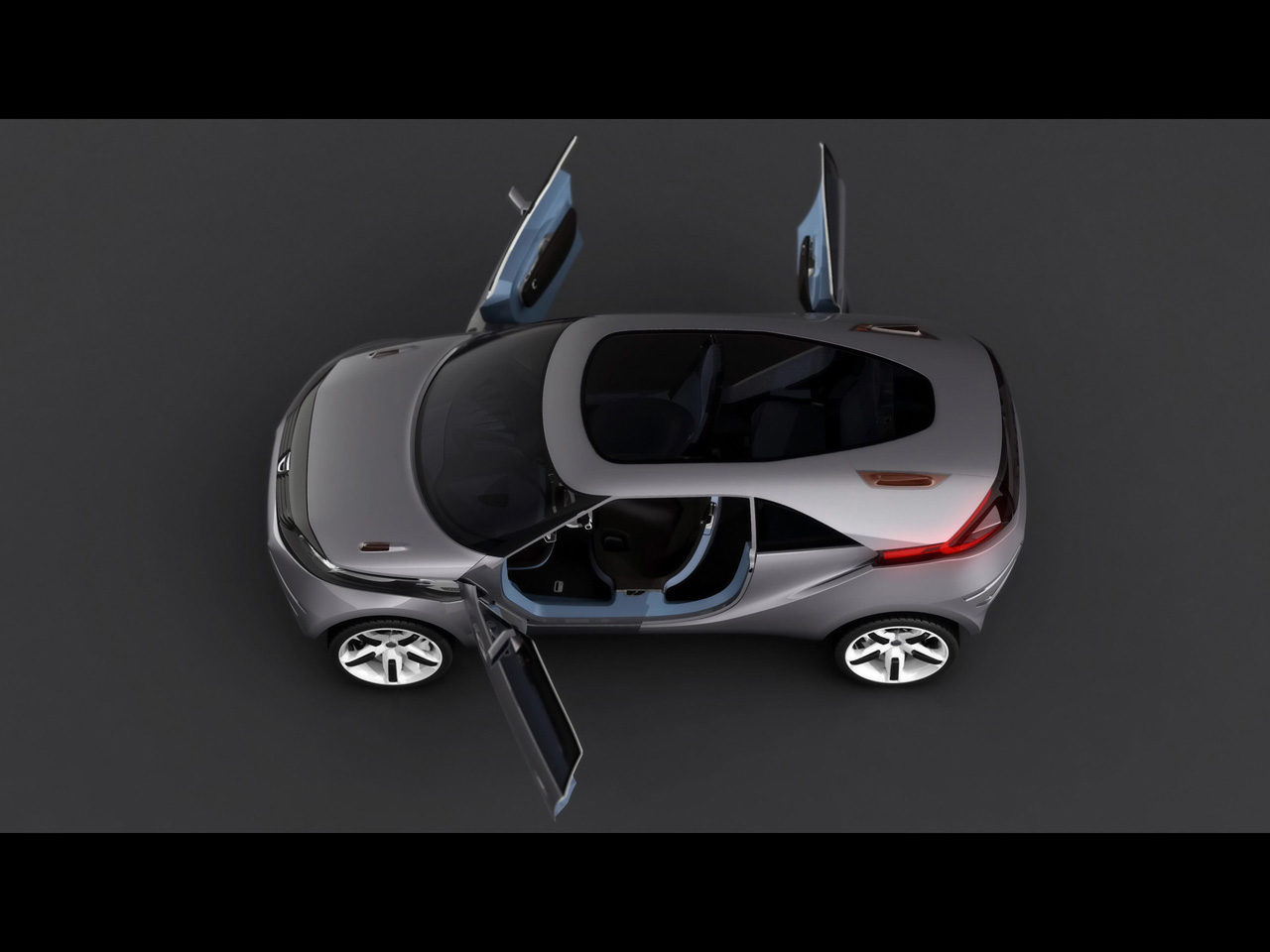
Dacia 2011


The Dacia Duster is the first crossover SUV developed by the Romanian automaker Automobile Dacia. Officially revealed on 8 December 2009, it became available in Europe from 18 March 2010.Based on the Nissan B0 platform, the Duster measures 4.31 metres (169.7 in) in length, 1.82 metres (71.7 in) in width and has 210 mm (8.3 in) of ground clearance. Its luggage space has a volume of up to 475 litres (16.8 cu ft), while with the rear benchseat folded and tipped forward, its carrying ability can exceed 1,600 litres (57 cu ft). 
The Duster is offered with two-wheel or four-wheel drive. The 4x4 variants make use of Nissan's all-wheel drive system[2] which allows the driver to choose from three different driving modes: Auto, in which the front/rear torque split is calculated automatically as a function of available grip, Lock, whereby 50 per cent of torque is consistently fed through the rear axle, and 4x2 where the transmission is locked into two-wheel drive for maximum fuel efficiency.
Dacia Duster features Bosch 8.1 ABS, as well as EBD electronic brakeforce distribution and EBA emergency brake assist. It also features ESC electronic stability control as an option on certain versions, as well as CSV understeer control and ASR traction control. This option also allows torque to be transferred away from a spinning wheel in 4x4 mode to improve traction when diagonal wheel spin occurs.On the passive safety front, Dacia Duster comes as standard with two front airbags (depending on market) and three-point seat belts with load limiters for the front seats. Depending on version, two lateral head/thorax airbags are fitted in addition to the driver and passenger front airbags to provide additional protection in the case of side impact. Pyrotechnic pretensioners for the front seats (depending on version) complete Dacia Duster's retention system.
A competition version of the Dacia Duster fitted with a 350 hp (261 kW) V6 engine and driven by Alain Prost took part in the 2009/2010 French ice racing championship Trophée Andros, finishing in second place.
In 2010, the Dacia Duster participated in the Rallye Aicha des Gazelles, being first in the crossover class. The two Dacia teams successfully finished the Rallye on board the Duster: Dounia and Isabelle (Team 315 - Dacia) were first in the general ranking, while Nathalie and Dorothée (Team 316 - Dacia) finished in 5th place (out of 8 teams competing in the class).
In 2011, Dacia announced that they would be racing the Dacia Duster in the "Unlimited Class" of the Pikes Peak International Hill Climb/ The Dacia Duster 'No Limit' that they will be using will be powered by an 850 bhp version of the VR38DETT engine used in the Nissan GT-R mated to a six-speed sequential transmission. The car is tuned by Tork Engineering, Sodemo and Renaultsport and will be driven by three-time Trophee Andros winner Jean-Phillipe Dayraut.
  

Dacia 2011


The Dacia Duster is the first crossover SUV developed by the Romanian automaker Automobile Dacia. Officially revealed on 8 December 2009, it became available in Europe from 18 March 2010.Based on the Nissan B0 platform, the Duster measures 4.31 metres (169.7 in) in length, 1.82 metres (71.7 in) in width and has 210 mm (8.3 in) of ground clearance. Its luggage space has a volume of up to 475 litres (16.8 cu ft), while with the rear benchseat folded and tipped forward, its carrying ability can exceed 1,600 litres (57 cu ft). 
The Duster is offered with two-wheel or four-wheel drive. The 4x4 variants make use of Nissan's all-wheel drive system[2] which allows the driver to choose from three different driving modes: Auto, in which the front/rear torque split is calculated automatically as a function of available grip, Lock, whereby 50 per cent of torque is consistently fed through the rear axle, and 4x2 where the transmission is locked into two-wheel drive for maximum fuel efficiency.
Dacia Duster features Bosch 8.1 ABS, as well as EBD electronic brakeforce distribution and EBA emergency brake assist. It also features ESC electronic stability control as an option on certain versions, as well as CSV understeer control and ASR traction control. This option also allows torque to be transferred away from a spinning wheel in 4x4 mode to improve traction when diagonal wheel spin occurs.On the passive safety front, Dacia Duster comes as standard with two front airbags (depending on market) and three-point seat belts with load limiters for the front seats. Depending on version, two lateral head/thorax airbags are fitted in addition to the driver and passenger front airbags to provide additional protection in the case of side impact. Pyrotechnic pretensioners for the front seats (depending on version) complete Dacia Duster's retention system.
A competition version of the Dacia Duster fitted with a 350 hp (261 kW) V6 engine and driven by Alain Prost took part in the 2009/2010 French ice racing championship Trophée Andros, finishing in second place.
In 2010, the Dacia Duster participated in the Rallye Aicha des Gazelles, being first in the crossover class. The two Dacia teams successfully finished the Rallye on board the Duster: Dounia and Isabelle (Team 315 - Dacia) were first in the general ranking, while Nathalie and Dorothée (Team 316 - Dacia) finished in 5th place (out of 8 teams competing in the class).
In 2011, Dacia announced that they would be racing the Dacia Duster in the "Unlimited Class" of the Pikes Peak International Hill Climb/ The Dacia Duster 'No Limit' that they will be using will be powered by an 850 bhp version of the VR38DETT engine used in the Nissan GT-R mated to a six-speed sequential transmission. The car is tuned by Tork Engineering, Sodemo and Renaultsport and will be driven by three-time Trophee Andros winner Jean-Phillipe Dayraut.
  

Tuesday, June 28, 2011

Covini C6W


Covini C6W 

Sport Sedan six wheels is the idea of Ferruccio Covini, There are several reasons why Covini C6W Spider uses six wheels:
In the case of deflation front tire, vehicle control is guaranteed by the other wheel on the side.
Disc brakes front of us, although a smaller single area, ensure a greater braking surface, this means less overheating and higher brake effort
Low risk of aquaplaning, because the two front wheels, which remove water to the people behind them, ensure better roadholding
Leisure is a consequence of the reaction force is more evenly distributed in this supension: reaction in the case of the pot is split between four-hole front wheel and shaking the chassis is limited.
Reducing unsprung weight in the wheels grip. improved directional stability: changes in angle due to slack in the steering mechanism (in stuctures like silentblocks) is compensated by a second set of wheels.
Two additional springs and dampers that provide a better handling vehicle.
Spider C6W Covini 8 cylinder engine in V formation, 4 valves per cylinder, naturally aspirated, gasoline direct injection Bosch-motronic, located at the rear of the vehicle.  Engine capacity of 4200 cc, producing 380 horsepower @ 6400 rpm, with maximum torque of around 450 Nm @ 2700 rpm. Mated to transaxle rear wheel drive transmission 6-speed reverse mechanical, manual and steeringwheel electro-hydraulic servo installed.
With performance that is owned, Covini C6W Spider capable of achieving a maximum speed to 300 km/h (185 mph).
The car with six wheels has a length of 4180 mm, width 1990 mm, height 1080 mm, 2230 mm wheelbase mm/2750.